Without knowing anything about the specific album, try and guess whether each album got a high or low rating.
It’s remarkably fun and I’m doing pretty well.
See, Pitchfork is the epitome of the new subjective style of criticism. All reviews are based solely on that reviewers personal reaction to the album. The article is then written in a lively, florid manner in support of that utterly subjective reaction. After reading enough of these you can see the trend. Grittily-produced rap and indie rock = high rating. Grittily-produced rap that the mainstream critical press has been praising recently = low rating. Well-produced complex music, such as modern classical, jazz re-issues, dense rock = low ratings, but not low enough to be dismissive. Re-issues of obscure 70s and 80s rock = stellar reviews.
I also like guessing the rating based on the name of the band (if I’m completely unfamiliar with them). The more ironic, the better the rating.
For some reason addiction has been a reading theme of mine in recent days. I am lucky to not have an addictive personality. It doesn’t really run in my family and I’ve never felt too much of the intense need for a substance/behavior. I often joke with myself that I don’t have the commitment for addiction. If there is one thing that runs in my family it is a commitment to constantly-shifting passions and interests. The men in my family tend to delve intensely into certain hobbies/subjects/ideas for a couple months at a time and then discard them for new ones (anyone who has read this blog for a significant amount of time will recognize this in me).
I often try to feed productive addictions though. Horn is a notoriously difficult addiction for me to sustain. Composing is catching on surprisingly well, but we’ll see how long that lasts. I like the feeling of desperation and loss that comes when I haven’t been creative for a time. The pain of fruitful withdrawals can be productive.
Anyway, here are a few perspectives on addiction I’ve come across in recent days:
From one of my favorite reads, Crispin Sartwell’s site, comes an intensely personal description of addiction:
Hating inanimate objects seems entirely senseless. Mere things have no intentions, make no decisions, commit no crimes. They aren’t guilty of anything. Why or how would you hate elements of the periodic table, clouds, liquids, rocks?
Nevertheless, far more than I hate any person, I hate alcohol, marijuana, cocaine, tobacco, methamphetamine, heroin. These stuffs or substances, these chemicals and vegetables and the fumes they emit when immolated, take away everything I have and everyone I love, every time. They are mindless, worthless, without value. They are empty. Meaningless. But they are the theme of my life. I came here to think, to study, to write. I came here to make love, to make babies, raise children, make a home, a garden, find some quiet joy. And my life has been dedicated to alcohol, tobacco, marijuana, and annihilation.
Addiction, I tell you, isn’t an epic tale of redemption, material for your amazing memoir and appearance on Oprah. It isn’t a James Dean movie, a Hemingway story, or a Jimi Hendrix/Kurt Cobain song of suffering, hyper-intense genius. It’s dying by choking on your own vomit. It’s common as excrement and as profound: reeking, valueless, purposeless, pointless, meaningless.
There’s no little essence of wisdom suspended in the whiskey, no sparkling geode crystals inside the rock, no signal in the smoke. There just is nothing there.
Read on. It gets quite personal and very devastating.
And a completely ridiculous take by the awesomely-named Kim Komando on so-called Digital Drugs:
We all know that music can alter your mood. Sad songs can make you cry. Upbeat songs may give you an energy boost. But can music create the same effects as illegal drugs?
This seems like a ridiculous question. But websites are targeting your children with so-called digital drugs. These are audio files designed to induce drug-like effects.
All your child needs is a music player and headphones.
Understanding Binaural Beats
There are different slang terms for digital drugs. They’re often called “idozers” or “idosers.” All rely on the concept of binaural beats.
It is incorrect to call binaural beats music. They’re really ambient sounds designed to affect your brain waves.
For binaural beats to work, you must use headphones. Different sounds are played in each ear. The sounds combine in your brain to create a new frequency. This frequency corresponds to brain wave frequencies.
There are different brain wave frequencies. These frequencies are related to different states like relaxation and alertness.
Digital drugs supposedly synchronize your brain waves with the sound. Hence, they allegedly alter your mental state.
It would be really annoying if it weren’t so hilarious.
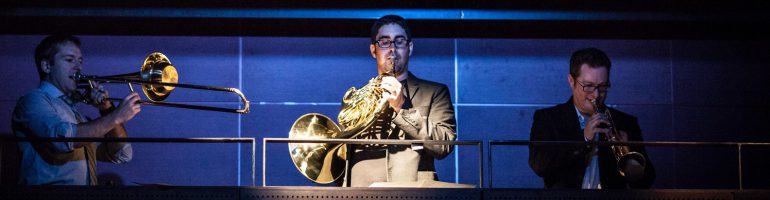
I will be performing excerpts from my Post-Christian Nihilist Pop Musical, The Little Death, on the East River Music Project this Saturday. Doors open at 2:30pm and I am opening, best of all it’s free! It is a showcase for New Amsterdam Records, that awesome new label you’ve all been hearing so much about. It should be an awesome show – it is the debut of my Lil Death Band, featuring Mellissa Hughes, Caleb Burhans, James Moore and Pete Wise, four of my favorite people on the planet. I am sharing the bill with some awesome acts as well: itsnotyouitsme, Timberbrit, Mark Dancigers, and Alex Sopp.
I Like Stuff – A gun-to-the-temple smile-fest from start to finish
He Touched Me (new version) – A hyper-sexualized cover of a gospel favorite
All of these songs feature soprano Mellissa Hughes, an amazing singer and my main collaborator on the musical.
I am also interviewed in the latest New Amsterdam Podcast, give it a listen to hear me speak with authority on subjects such as sexual undercurrents in Christian music and the use of Auto-Tune as a method of clearing ones soul free of sin.
Hey, so you might be thinking that I gave up on my Happy Week quest, but unfortunately I had some interference, by my body. Yeah, I had to go back to the hospital for another transfusion (I got my transfuse on!). Waa waaaa. Whatever, it was fine. Annoying and lame of course, but it’s done. I feel better, stronger. Not exactly ready to lift the world stronger, but not exactly standing up and walking across the room makes my heart pound either. So that’s good.
One of the pleasant surprises was that the ER has TVs now, for each individual bed! Part of what made my last trip suck so much was that an entire room full of ailing people, left only to stare at the ceiling, will generally act like crazy assholes. I mean, I still had my share of shrieking old ladies and whimpering grown men, but add Monday Night RAW and Murder, She Wrote into the equation and the cacophony drops tenfold. Also, Mell was with me pretty much the whole time so that made it infinitely better. It really helps having another person there, especially when I’m weak from the HHT – it can kind of cloud my head. The last time I went I described my condition as “Severe Anemia”, and spent hours in the waiting room. We got there on Monday evening and the place was more packed than I have ever seen it. I had Mell fill out my description and she wrote: “Rare blood disorder, requires immediate transfusion”. We got in there in about 20 minutes. Awesome.
The rest of the stay was as usual: tedious, frustrating, boring, lotsa pokes by the needle, lotsa doctors, lotsa Cartoon Network. I spent a good deal of it writing Sibelius parts for The Little Death, feeling a little like J Dilla. They gave me one unit of blood on Tuesday, which made be feel better. My blood count was consistently higher than it felt, which was odd. It dipped down to an 8.5 at it’s lowest point, which is by no means good, but not as bad as it has been (I’ve been down to a 4.5 before!). When I left the hospital it had come up to a 9.9 and I felt better, but still pretty weak and loopy. I’m on a heavy red meat diet (could be worse!) for the next week or so while I try to pull it up further. Normal for me is around 12. 13 is great.
Anyway, I’m spending most of my time at home, resting up for a crazy next week. This is giving me a good chance to do some mastering of some of my tracks, so I’m planning on releasing a few new songs from The Little Death, in advance of my Saturday show at The East River Music Project, on Monday so keep an eye out!
Hipsterdom is the first “counterculture” to be born under the advertising industry’s microscope, leaving it open to constant manipulation but also forcing its participants to continually shift their interests and affiliations. Less a subculture, the hipster is a consumer group – using their capital to purchase empty authenticity and rebellion. But the moment a trend, band, sound, style or feeling gains too much exposure, it is suddenly looked upon with disdain. Hipsters cannot afford to maintain any cultural loyalties or affiliations for fear they will lose relevance.
An amalgamation of its own history, the youth of the West are left with consuming cool rather that creating it. The cultural zeitgeists of the past have always been sparked by furious indignation and are reactionary movements. But the hipster’s self-involved and isolated maintenance does nothing to feed cultural evolution. Western civilization’s well has run dry. The only way to avoid hitting the colossus of societal failure that looms over the horizon is for the kids to abandon this vain existence and start over.
It’s a decent article, especially for Adbusters, who I believe can be way annoying and pretentious themselves. (Must. Stay. Positive!) But he makes a lot of good points about this strangest of trends. My favorite line from the article is “The dance floor at a hipster party looks like it should be surrounded by quotation marks.” Mafoo likey.
Alex Payne distinguishes the hipster from nihilism:
What distinguishes hipsters for me is that they believe in nothing, but unconsciously so. It’s not nihilism, because nihilism is well-considered position. Hipsters are, to my mind, the first utterly apolitical, a-philosolphical subculture of the postwar era.
Even the slacker generation believed in, well, slacking: they valued an opposition to the competitive mindset of the preceding generation. That may be a shallow thing to value, but it provides the groundwork for some sort of political/cultural stance. Hipsters have no such political or philosophical foundation. I’d go on to argue that they lack even the cultural foundation to contribute meaningfully to the arts.
I’d slightly differ in that many of them show a dabbling interest in politics, but mainly as a tool to remain competitive in social situations, much like staying current with underground indie rock bands, artists, etc that may or may not have any redeeming cultural value. Hopefully the trend is dying out. It seems about time. Unlike Adbusters I don’t believe that it is the end of the world that hipsters are around (Adbusters actually does believe it is the end of the world, much like they believe eating fast food is and shopping is). They’re just taking a long time to go away…
Fuck yeah. This is what I’m talking about. I really think that the trend of arranging classic ‘unplayable’ works like this (and Revolution 9 :) ) are part of the new paradigm of commonplace interactivity. 10-15 years ago, when our entertainment was still primarily based on consumption, we were perfectly happy to accept a recorded piece such as this was simply unplayable, just as we accepted that we couldn’t interact with our TV and that our songs were locked onto a CD. As the web matured and as users gained significant power over their entertainment, we’ve started to see people asserting control over things they never dared to before. Thus, the explosion in sampling, mashups (for what they’re worth), audio and video remixing. Even those annoying YouTube videos that have, like, footage from Dragonball Z with a song by Jack Johnson over it is still an expression of freedom and increased control. And in fact, the great thing about YouTube is that it allows someone with an interesting idea to have that idea spread virally between millions of people in a matter of days.
It’s unsurprising then that artists would want to take the experience of such ‘unplayable’ pieces into their own hands. To some extent it’s the same reason the new Ghostbusters video game is coming out. We always dreamed of taking part in the experience, but never imagined it to be a reality. I hope to see more interesting projects along these lines. Some of them are better than others, some feel more futile than others, but overall they are expressions of joy. The ones that pride themselves on audacity tend to be the ones that miss this mark, the projects that seem more like marketing decisions than artistic ones. But that’s enough about that (I’m staying positive this week!). Anyway, the urge for interactivity is a creative one, even if it means the dissection, indeed the destruction of the piece, in it’s reconstruction. It can never replace the piece or top the piece, and should never aspire to. I love good covers – I plan on releasing a Covers album after I finish The Little Death – so I’ve been thinking a lot about what a good cover is and does. A good cover should exist in its own right as a new and unique piece of music, but it should also make you appreciate the original ever more. Even the seemingly destructive, parodical covers by The Dead Kennedys, of songs such as I Fought The Law and Viva Las Vegas, still make me want to listen to the originals.
 Matt Marks Music